
How precision plastic injection molding works — from in-house mold design and multi-cavity tooling to material selection and the right service model for 50-piece prototypes through 50,000+ production runs.
A medical device needs 500 cleanroom-grade housings in 15 days. A consumer electronics launch needs a million high-gloss shells. Both are plastic injection molding — what separates them is precision, process control, and the right service model. This guide walks you through what precision injection molding actually is, the materials it supports, and how to choose between prototyping, bridge production, and mass production.
What Is Precision Plastic Injection Molding?
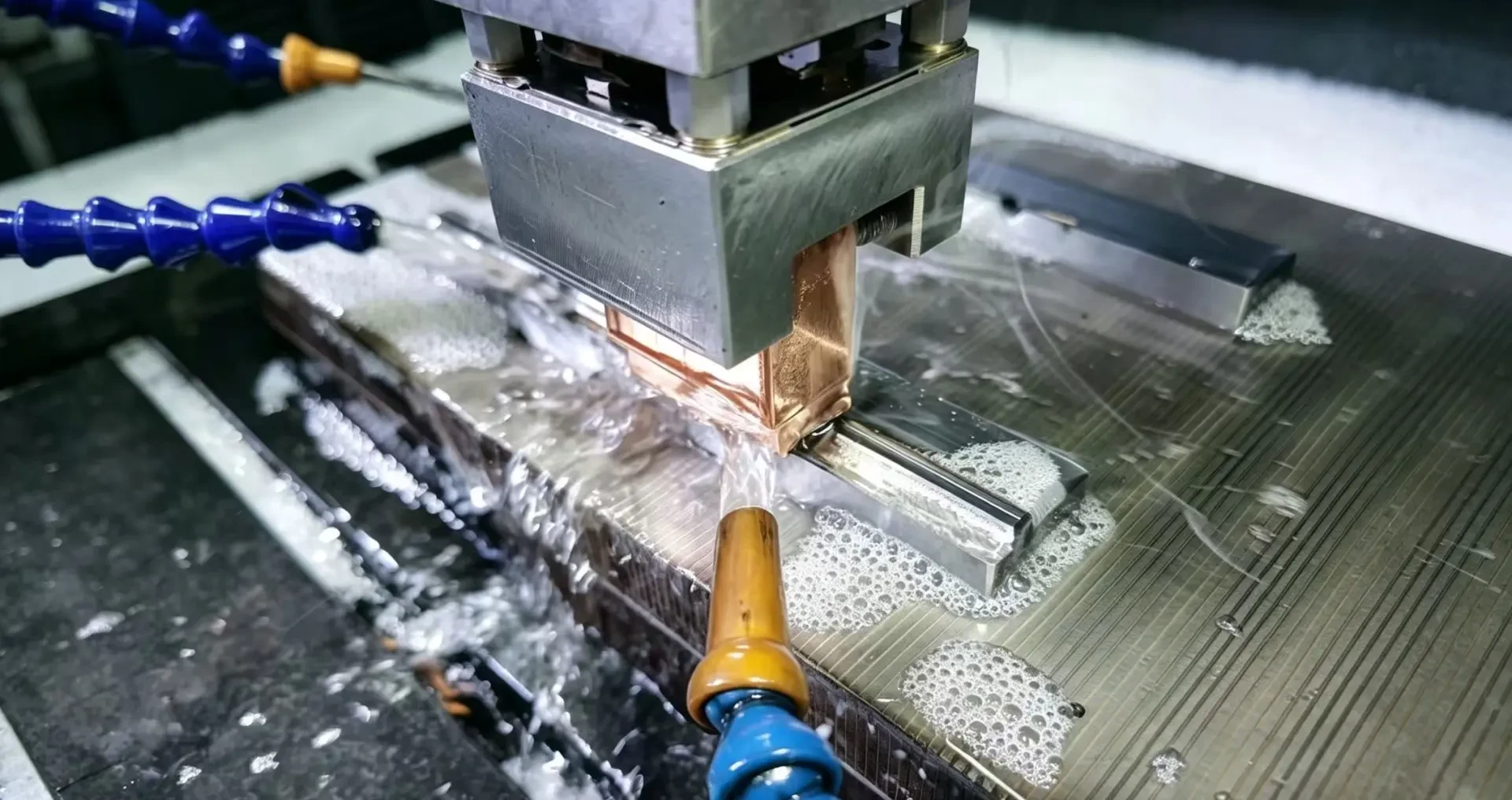
Precision plastic injection molding is more than pushing melted resin into a cavity. It is a controlled manufacturing process where melted thermoplastic is injected under high pressure into a precision machined steel mold, then cooled and ejected as a dimensionally accurate production part.
True precision means tooling engineered for tight tolerance — multi-cavity and hot-runner molds for complex structures; multi-tonnage machines with robotic arms holding repeatable process windows; materials specified to performance, from engineering to medical grade; and dimensional control at ±0.02 mm as standard, with precision testing to ±0.01 mm.
The End-to-End Capability Chain
A reliable injection molding partner does not just run the press. The process runs end to end:
Mold Design & Manufacturing. Injection and die-casting molds, including multi-cavity and hot-runner designs for complex structures — built in-house, not outsourced.
Precision Injection. Multi-tonnage machines with robotic arms for high-precision, high-efficiency production.
Multi-Material Injection. ABS, PC, PEEK and medical-grade materials, meeting food and medical standards.
Assembly & Export. Sub-assembly, functional testing, packaging and global logistics support.
Materials You Can Mold
Material choice drives function, surface finish and cost. Common grades for precision injection molding:
Material | Key features | Typical applications |
|---|---|---|
ABS | Good impact strength, surface finish | Housings, consumer products |
PC / PC+ABS | High heat and impact resistance, transparent | Auto interiors, medical devices |
POM / Nylon | Low friction, wear resistance, high strength | Gears, structural brackets |
PE | Toughness, chemical and low-temperature resistance | Medical consumable housings, industrial parts |
PEEK / Medical | Biocompatible, chemical resistance | Surgical tools, aerospace parts |
Which Service Model Fits Your Volume?
You do not need hardened tooling for a 500-piece pilot. Choosing the right stage saves both time and capital:
Stage | Volume | Lead time | Tooling |
|---|---|---|---|
Rapid Prototyping | 50–1,000 pcs | 10–18 days | No / low tooling |
Low-Volume Production | 1,000–50,000 pcs | Per project | Bridge mold |
Mass Production | 50,000+ pcs | Per project | Hardened steel mold |
Proof in Production
Medical diagnostic equipment: 500-pc small batch, 15-day delivery, cleanroom standard.
Automotive sensor bracket: 10,000 pcs with CPK > 1.67 batch consistency, high-temperature aging tested.
Consumer electronics housing: million-level capacity, ±0.02 mm accuracy, high-gloss injection.
PEEK high-performance parts: biocompatible and chemically resistant — medical implants, aerospace, and high-end industrial equipment.
From the Shop Floor: Precision You Can See
Mold design is not a drawing on paper — it is steel, cavities, and locating pins. Here is what precision looks like in our plant.
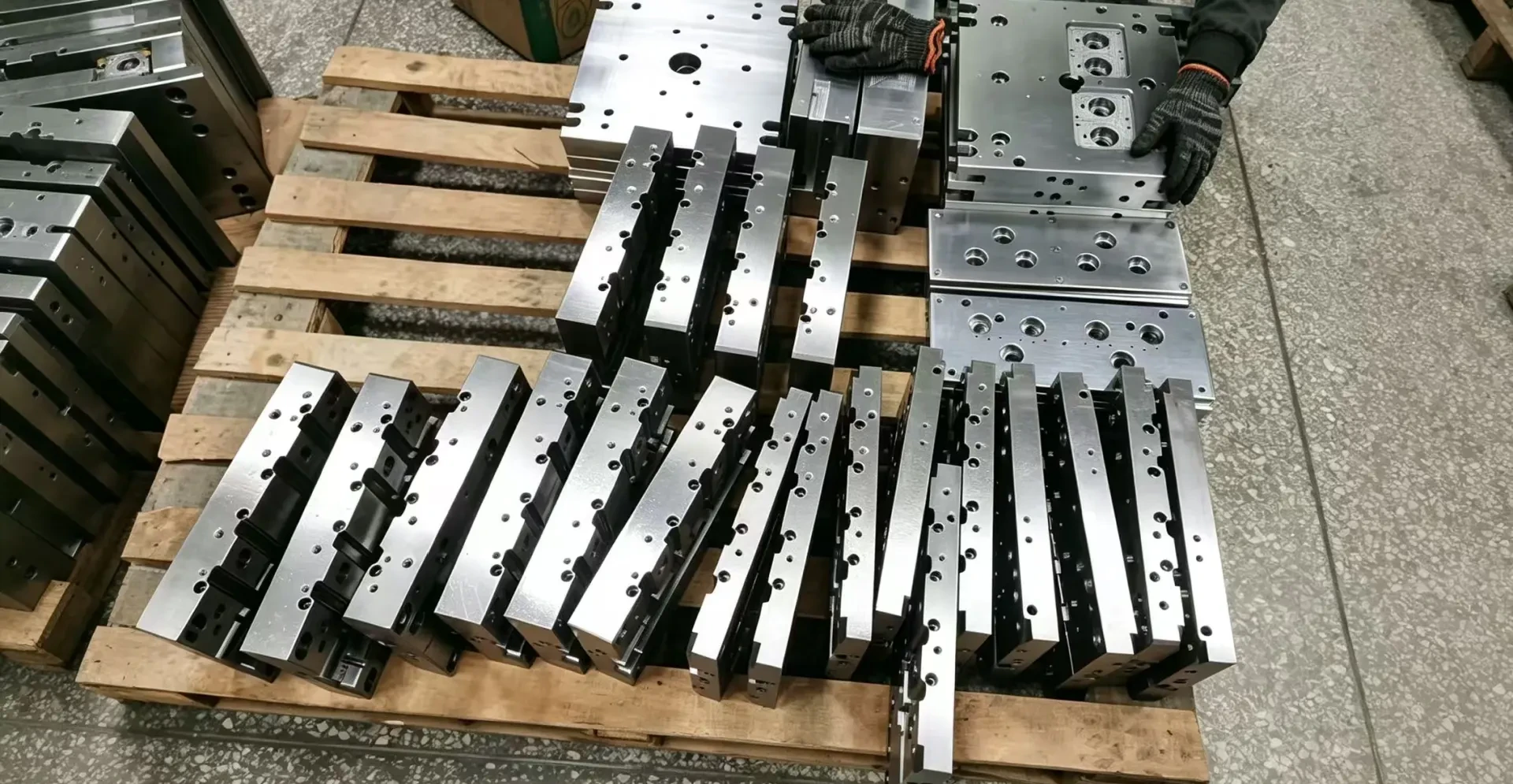
In-house mold manufacturing. Mold plates drilled and milled with core-and-cavity features, staged on the shop floor before assembly — tooling built in-house, so design changes stay fast.
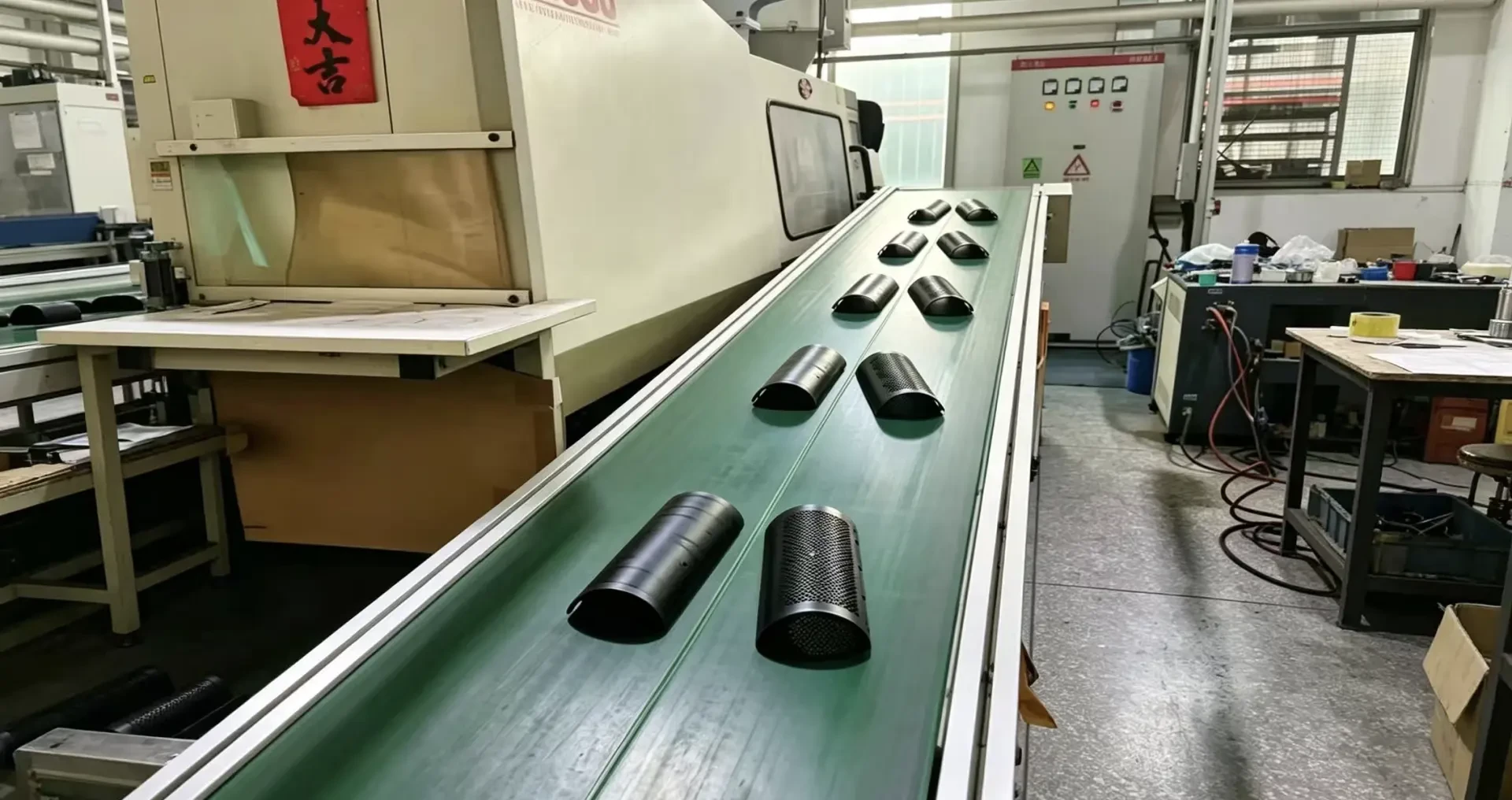
Production on an N3000 injection machine. Cylindrical parts with smooth and mesh-surface variants coming off an N3000 injection molding machine onto an automated conveyor — repeatable output from a single tool, ready for high-volume runs.
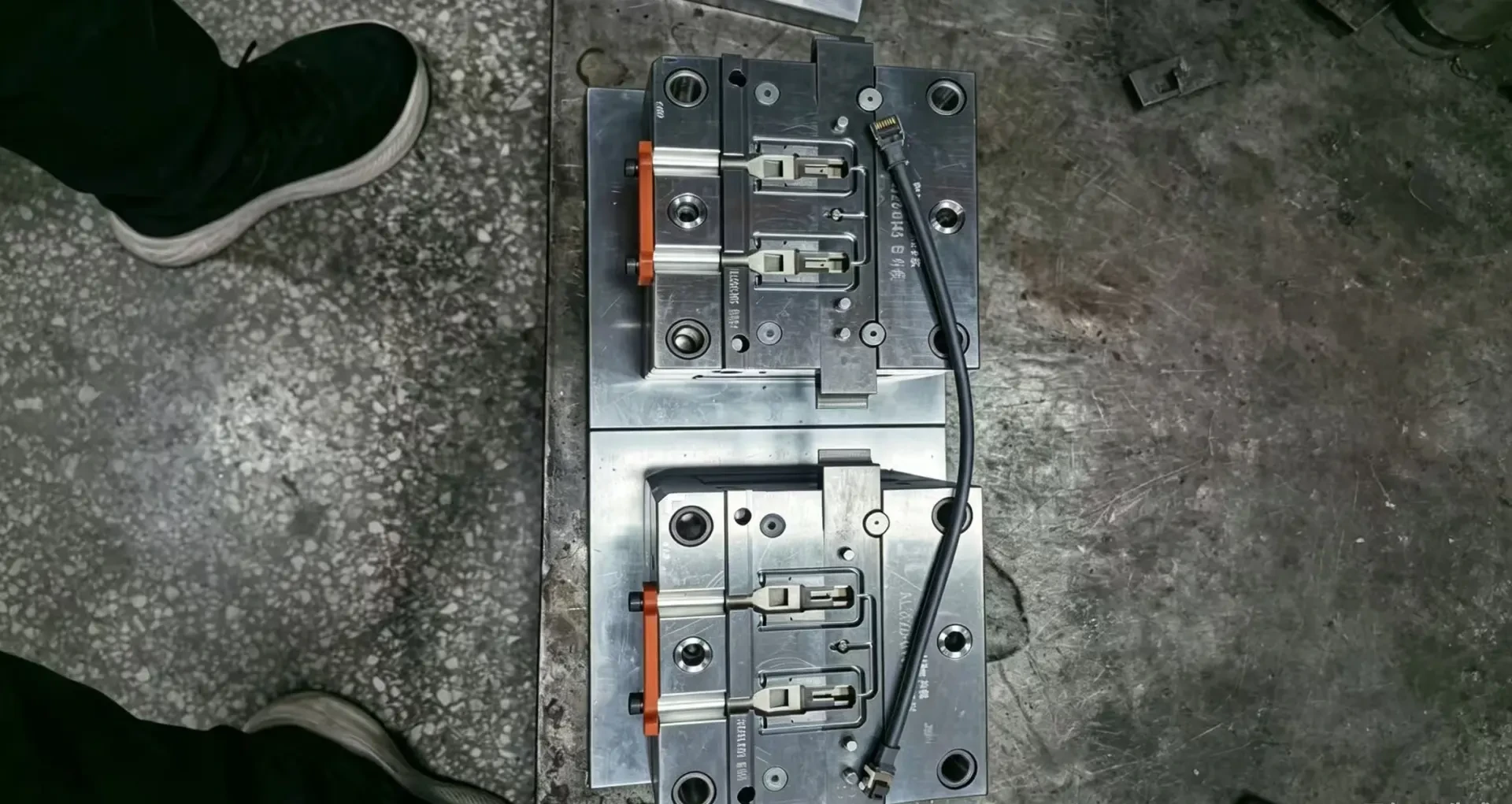
Precision mold assemblies (Project AL2026-0145/0146). Matched mold assemblies with precision cavities, locating pins and guided components — the tooling that holds ±0.02 mm consistency run after run.

Quality Control
ISO-aligned process control with precision testing at ±0.01 mm, running through incoming inspection, in-process patrol, first-article inspection, sampling or full inspection, and shipping inspection. Full traceability supports medical and automotive programs.
Frequently Asked Questions
What tolerance can precision injection molding hold?
Standard dimensional control is ±0.02 mm, with precision testing down to ±0.01 mm on critical features.
How long does injection molding tooling take?
Rapid prototyping runs deliver 50–1,000 pieces in 10–18 days with no or low tooling investment; bridge and hardened steel molds are quoted per project.
Which materials are medical-grade?
PC, PEEK and biocompatible engineering grades that meet medical and food contact standards are available for medical and consumer parts.
What is the minimum order for injection molding?
We support runs from 50 prototype pieces up to 50,000+ mass-production volumes — the service model, not the process, changes with volume.
Can you support medical and automotive programs?
Yes — cleanroom-standard small batches, CPK-driven batch consistency and full traceability are built into our quality system.
Get a Free Mold Strategy Review
Whether you need 500 parts for a clinical trial or 500,000 for a product launch, the underlying process is the same — only the service model changes. Get the mold design right, and precision follows.
Send us your part drawing. We will recommend the right mold strategy and give you a straight answer on tolerance, lead time, and cost — no obligation.